Why Frozen Pipe Damage Behaves Differently Than Other Water Losses
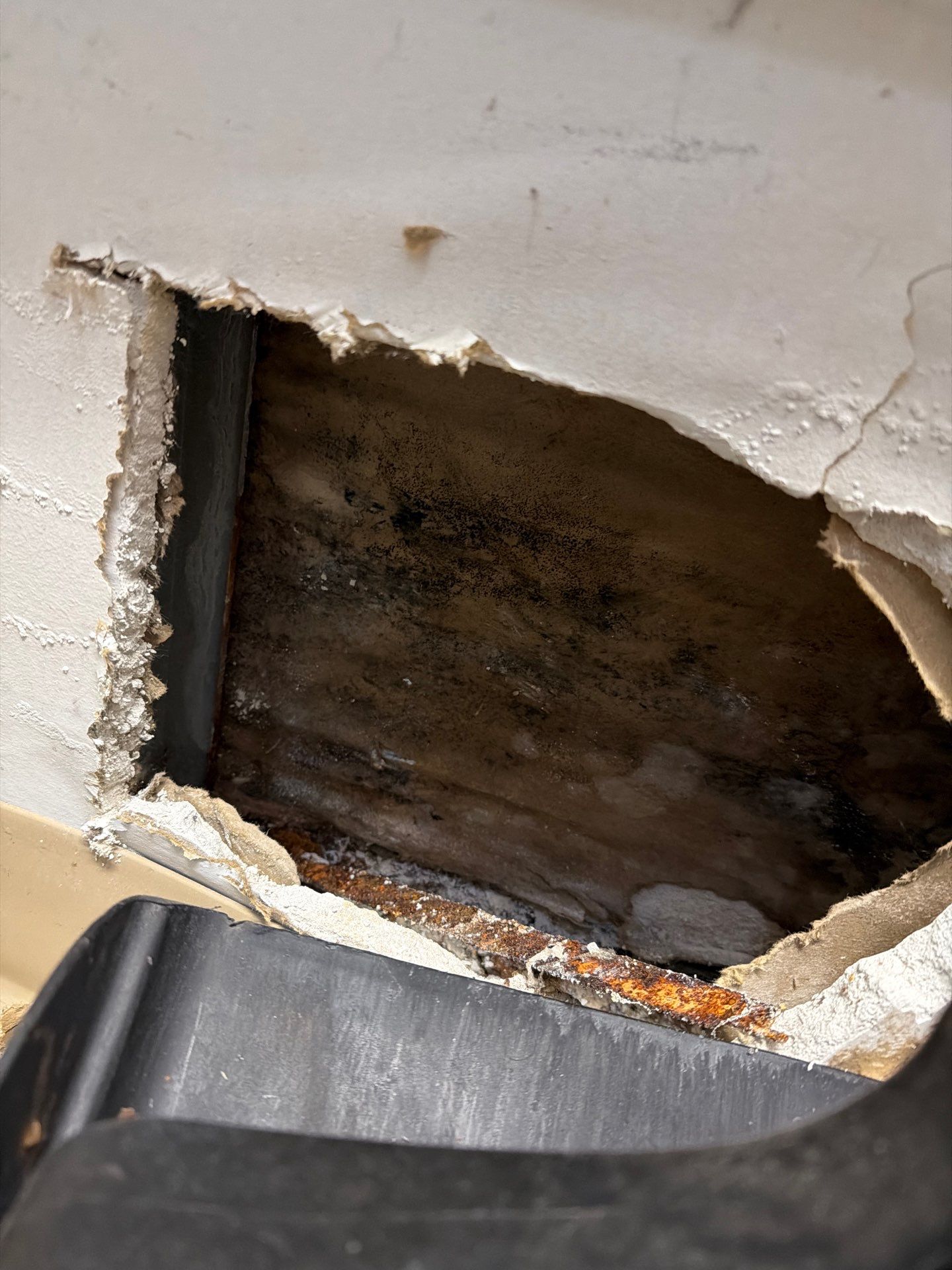
A frozen pipe burst is not the same emergency as a washing machine hose failure or a sump pump backup. The water is almost always clean Category 1 at the moment of release, but the failure point is usually hidden inside an exterior wall, a vented attic, a crawlspace, or a garage ceiling cavity. That means water travels through insulation, framing, and drywall before you see it. By the time visible evidence appears, the affected square footage is typically two to four times larger than what you can see. This is the single most important thing for Woodcreek Crossing homeowners to understand. The puddle on your kitchen floor is the symptom. The damage is upstream, behind materials, and it is already wicking outward at roughly an inch per hour through gypsum board.
Winter also stacks the deck against fast drying. Outdoor humidity in Woodcreek Crossing during a cold snap is low, which sounds helpful, but indoor relative humidity climbs fast once hundreds of gallons evaporate into the structure. Furnaces run hard, condensation forms on cold windows and uninsulated walls, and secondary mold colonization can begin within 48 to 72 hours if professional drying does not start. The repair window is short, and the cost difference between acting in hour one versus hour twelve is rarely small.
There is also a category shift to watch for. Water that sits in a wall cavity for more than 24 hours, especially near older galvanized fittings or behind a kitchen sink, can move from Category 1 to Category 2 as it picks up contaminants from drywall paper, dust, and mouse droppings common in Woodcreek Crossing attics and crawlspaces. That category change carries real consequences. It increases the required removal scope, raises antimicrobial costs, and sometimes triggers a different section of your policy. Woodcreek Crossing Water Restoration technicians test water samples on arrival and document the category in writing so that nothing about the loss can be reclassified later by an adjuster looking to reduce payout.
The Frozen Pipe Burst Decision Matrix
The table below maps the five most common frozen pipe failure points we see in Woodcreek Crossing homes against what you should expect for water volume, hidden damage radius, typical drying time, average restoration cost, and insurance considerations. Use it to gauge severity before our crew arrives, and use it to push back if an adjuster underestimates scope.
| Failure Location | Typical Water Volume | Hidden Damage Radius | Drying Time | Restoration Cost Range | Insurance Notes |
|---|---|---|---|---|---|
| Attic supply line (second floor ceiling burst) | 200 to 1,200 gallons | Two floors plus insulation saturation | 5 to 9 days | $8,000 to $35,000 | Usually covered. Document attic insulation R-value loss separately. |
| Exterior wall kitchen or bath supply | 50 to 400 gallons | Wall cavity plus adjacent cabinet base and subfloor | 4 to 7 days | $4,500 to $18,000 | Covered if heat was maintained. Adjusters may ask thermostat history. |
| Garage ceiling line above living space | 100 to 600 gallons | Ceiling, drywall, and any finished room below | 5 to 8 days | $6,000 to $22,000 | Common denial point if garage was unheated. Argue interior conditioned space. |
| Crawlspace supply or drain line | 80 to 500 gallons | Subfloor, joists, ductwork, vapor barrier | 6 to 10 days | $5,500 to $20,000 | Mold rider matters. Push for joist drying logs, not just surface readings. |
| Exterior hose bib or sillcock | 30 to 250 gallons | Rim joist, basement wall framing, finished basement materials | 3 to 6 days | $2,500 to $12,000 | Often covered. Frost-free replacement is typically not reimbursable. |
Reading the Matrix Against Your Situation
The first column tells you where to look. The second tells you whether you are dealing with a nuisance leak or a structural event. Anything above 200 gallons almost always requires professional water extraction, dehumidification at 100+ pints per day per affected zone, and antimicrobial treatment of framing. The drying time column matters because insurance carriers in Indiana increasingly cap additional living expense at a fixed daily rate, and undersized drying equipment stretches your displacement by days. If the first restoration company you call cannot show you a drying plan with target moisture content for wood framing (usually 12 to 15 percent) and gypsum (under 1 percent on a pin meter), call someone else. Our team documents every reading, every day, in writing. That same documentation is what gets a claim approved without a fight.
The cost ranges assume a mid-grade Woodcreek Crossing home with standard finishes. Engineered hardwood, custom cabinetry, or specialty plaster can push numbers well above the upper bound. For deeper pricing context, our complete water damage restoration cost breakdown walks through line items most adjusters scope. If your burst happened in a finished lower level, our basement flooding response page covers the specific extraction sequence we use when standing water is involved. And if your event started higher in the house and ran down, the burst pipe immediate steps guide covers the first-hour actions that protect both your structure and your claim.
What Changes the Numbers Most
Three variables move the cost more than any other. First, response time. A call placed within two hours of discovery typically saves 30 to 50 percent versus a call placed the next morning. Second, whether the water reached insulation. Wet fiberglass or cellulose almost always has to come out, and re-insulating adds $1.50 to $4 per square foot. Third, secondary materials. Hardwood floors that cup can sometimes be sand-and-refinish candidates if drying starts immediately, but past 48 hours, replacement becomes likely. Knowing these levers before the adjuster arrives changes the conversation from defensive to specific.
The Documentation That Wins Claims
Beyond the three cost levers, the single biggest predictor of a smooth claim is photographic and moisture-mapping documentation taken before any demolition begins. Woodcreek Crossing Water Restoration produces a room-by-room moisture map, thermal imaging stills, and a written scope tied to Xactimate line items within the first 24 hours. When that packet lands in an adjuster's inbox before they visit the property, approval timelines in Woodcreek Crossing shrink from weeks to days, and supplements for hidden damage discovered during demolition almost always get paid without a second inspection.